Posts

In a World of My Own - Photoshop Project
Image
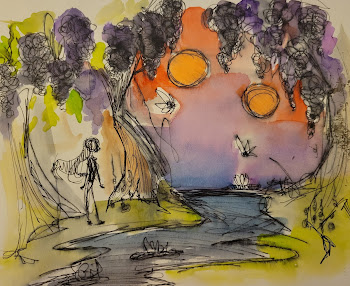
 Curiouser and curiouser! Down the rabbit hole we go-er- I mean down to Photoshop we go. For this week's project, I'm tasked with creating another dimension, a portal to another universe with the power of Photoshop! Despite my difficulty with the program, I found solace in Youtube tutorials and the modules. With proper effort and time, I found my way around it! Moving onto the project, I scanned through the possible entries and ideas I could put. I wanted elements of Myth, Fantasy, Melancholy, and maybe a touch of ominous and dark in its theme. Brainstorming is over; I ended up with a more light-hearted tone than I anticipated. I mostly found inspiration from movies such as  The Spiderwick Chronicles  and  Epic,  where they all center around nature and the little mythical creatures within .  Concept: I like the idea of world-building, and especially in animation studios, there are specific characteristics that need to be shown. For example, I wanted the co...
Adobe Lightroom & Tips

Image
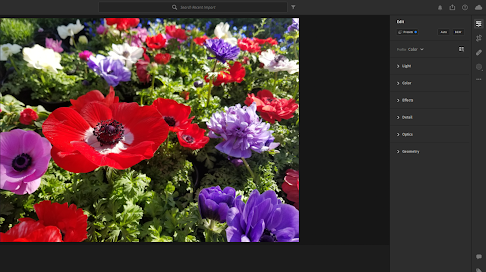
       I'm relatively new to photo editing, but this week's venture was an experience. I am familiar with the standard photo editor but having access to any Adobe editing software is vastly different. It's more versatile in its options and more specific as to what exactly you want to change in the photo- you can draw an image out or even change the picture's hue entirely- it's all up to the editor. There is a certain amount of precision in photo editing, much like film making editing can completely change the meaning or the way the image is to be viewed. For example, if I were to change the image's focus point, I can subtly tell the viewer's eye where to look.  For my sake, here's a rundown of how the software works. There are four tabs on the right hand side: Edit, Crop & Rotate, Healing Brush, and Masking.   Edit The edit tab is the core of the editing software. You can adjust the Light, Color, Effects, Detailing, Optics, and Geometry. For examp...

Fine Art: Photography

Image
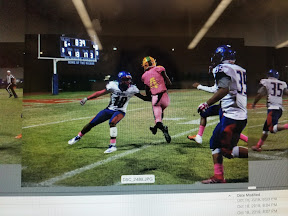
Photography is one of the many mediums in producing images based on the photographer's vision. Through photography, you manipulate the subject matter or image by lighting effects, different angles, or even editing. In many ways, photography doesn't always need to be artistic. Yet, when you look at documentary photos such as sports photography, it's evident that there is some artistic merit in portraying the players.     I spoke of my high school academy and my brief history before, but I was genuinely introduced to this medium through my yearbook club. Being a chief editor on the team was quite the task, but I learned leadership skills and the basics of photography from it. I was taught the rules of thirds, framing, all that jazz. Of course, I'm not the best photographer in the world, but it made me experience the hands-on work of trying to document events. It was laborious work, from action shots to lifestyle, since I was taught to take the photo and not think of the r...

Necessary Art Appliances: A Reflection

Image
With a tremendous appreciation of making art also comes the important necessity of supplies. In the modern age of technology, traditional and 2D are past mediums. While they are still used for practice or to show diversity across the mediums, 3d and digital are now the new normality in art. Specifically for my dream career, storyboarding in animation revolves around this very thought. I was taught to be a traditional artist; It’s what I grew up with. As a result, I’ve always struggled with the digital medium, but I’ve never discouraged the thought of it. Even now, when I’m closer to finishing my degree, I need to change and adapt quickly. Through the lecture, I accustomed myself to free-to-use apps such as Synfig, an open-source 2d animation software. Unfortunately, I also saw the dread DaVinci resolve in the video editing section! Back in high school, I was a part of the Digital Design and Production Academy, and since Adobe wasn’t set up for us yet, we had to use DaVinci. I remember ...

Elements and Principles of Art

Image
For this week’s lecture, we are familiar with The elements of art, the visual tools or components that the artist uses to create a work composition. The elements consist of:    Lines: A one-dimensional path created by a stroke of any medium of choice. (For example, pencil, ink, etc.) It can vary in appearance, from straight, curvy, or irregular. Shape is formed by lines; it is an enclosed space defined by color, texture, etc. Varies from Organic or Geometric. Color: Produced when light hits an object and the color is reflected to our eyes.  Value: The lightness and darkness of a color. It can be used in moderation. Form: Volume is shaped with dimension and can be achieved with shading techniques. Texture: Surface quality of a work of art; visually detailing to portray an exterior Space: Refers to the illusion of 3D space within the composition. Shading, highlighting, or linear perspective can be used to define space.  The elements of art are then utilized throug...

Copyright and The Art World

Image
     If you're an artist trying to make a profit on the world wide web, you might be familiar with the copyright terms. Copyright is defined as "a type of intellectual property that protects original works of authorship as soon as an author fixes the work in a tangible form of expression." (What is copyright?) This means that an original work made by anyone has the moral right to said original content, that way, it prevents it from being stolen. Now, That's not to say that I can't use anyone else's work entirely, but it does mean that if I want to use someone else's work, I need to be reasonable about its usage. If I were to use all of someone's copyrighted material, I would be a risk for a copyright strike. As another artist, I could dispute it if it was under fair use- but be warned; I cannot abuse this ability too much. I remember seeing a copyright dispute happening to one of the YouTubers I watch: Kurtis Conner. (Check out his videos!!) Kurtis di...

Digital Art: Art made in the Digital Age & The Fluxus/Dada Movement

Image
     Digital Art is a genuinely diverse section of art once examined. From Design, Film, and Video Games, digital art has proven to be more than the traditional canvases or sketchbooks; It has a form that can be manipulated and interpreted differently by the artist.       The history of Digital Art also spans far beyond what you'd initially think, as well. It's easy to believe that it was only until recently that digital art was defined by recent technology. But despite that belief, Digital art has had its roots spanning back to the early 1950s. Following the Dada and Fluxus movement, they formed this idea of rejecting what society accepted and embracing the unusual. It's somewhat similar to the Pop Art movement, only that it criticized American consumer culture. For example, think of popular Rock Star David Bowie! His compositions in music and fashion have embraced this very idea for his various personas as an artist.     ...